Why hybrid energy parks win: solar, storage, and the case for utility-scale investment

The clean energy transition has moved from ambition to balance sheet.
Capital is flowing into renewables at record pace, and that is exactly why the bar for a good investment keeps rising. When almost anyone can build a solar park, the question for utility-scale investors, energy companies, and large industrial buyers is no longer whether to invest in clean energy. It is which assets will still earn well ten and twenty years from now.
The answer is increasingly the same: the hybrid park.
At its core, a hybrid park pairs utility-scale solar with battery energy storage (BESS), with wind added as a third layer where the site and grid support it. That combination is quietly reshaping what a bankable renewable asset looks like.
Key takeways in a nutshell:
- A hybrid park pairs utility-scale solar with battery storage, optionally wind. Its strength is timing: delivering power when it is worth most, not just producing more of it.
- Storage turns variable solar into a dispatchable, steady output, which is what makes revenue predictable and a project financeable.
- One asset, several income streams: energy sales, capacity, frequency regulation, and Fingrid’s reserve markets, which pay for the readiness to adjust and which a solar-only park cannot reach.
- A single-axis tracker adds roughly 10 to 20 percent yield from the same land and shifts output toward higher-value morning and evening hours. In a hybrid, the tracker and the battery compound.
- Grid connection and permitting decide whether a project ever earns. The integration, not the hardware, is where value and risk sit.
- This is proven, not theoretical: Callio is producing, Honkisaarenneva is under construction, and Toholampi (around 250 MW) is in development.
The core: solar plus storage
On its own, solar is the most cost-competitive electricity most markets have ever seen. Its weakness is timing. It produces when the sun is up, not necessarily when prices or demand peak. Battery storage solves exactly that problem. It lets the asset hold power and release it when it is most valuable: after sunset, during demand peaks, or at the right moment on the spot market.
This is why we build hybrids around solar and storage first. Solar delivers predictable, low-cost generation. Storage turns that generation into something you can dispatch and time. Where a site and its grid connection favour it, wind adds a complementary profile, since wind often blows at night and through the darker months when solar is quiet. The three together cover each other’s gaps, but in a Nordic hybrid the value engine is the pairing of solar and a battery.
From intermittency to dispatchability
Intermittency has always been the standard critique of renewables. The sun sets, the wind drops, and the grid does not like surprises. Storage changes that conversation. It converts variable generation into a steady, controllable output, which matters to an asset owner in three concrete ways:
- More consistent delivery into the grid, and fewer penalties for imbalance.
- The freedom to sell when prices are high, instead of being tied to the moment production happens to peak.
- Steadier, more predictable revenue, which is what makes a project financeable in the first place.
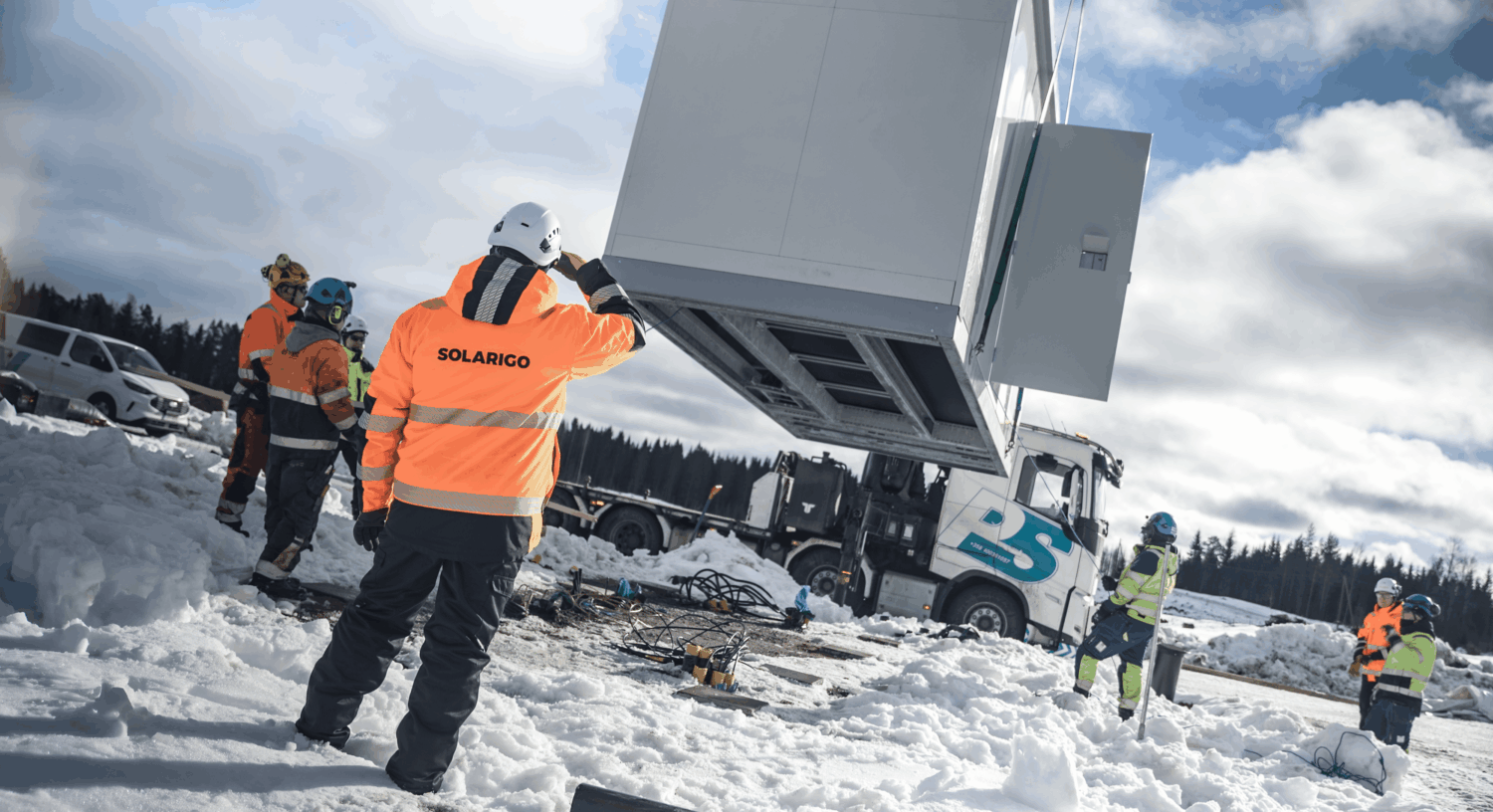
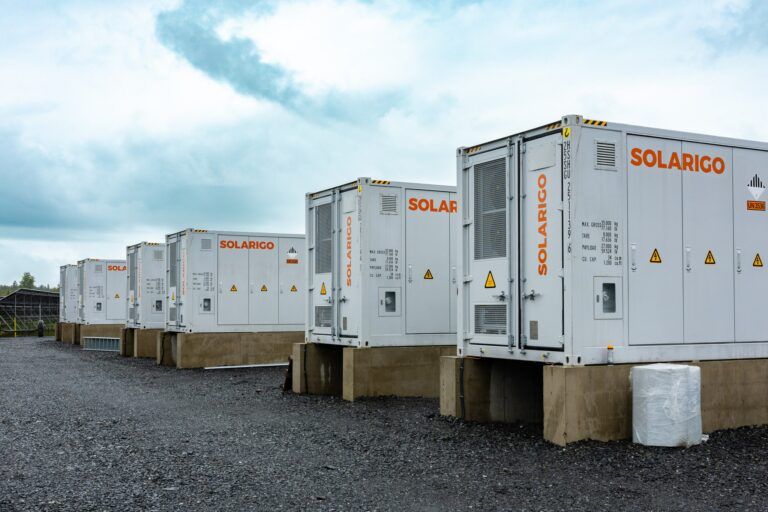
Delivering that comes down to the unglamorous part: the Balance of Plant for the BESS. The civil works, electrical connections, and grid readiness are what let a storage system plug in and start earning without delay.
Why this adds up for utility-scale investors
A hybrid park is not just a technical upgrade on a solar field. It is a different, sturdier investment.
Diversified risk. Combining generation with storage reduces your exposure to any single weather pattern, price spike, or market signal. One cloudy, windless week no longer decides the quarter.
More ways to earn. A battery lets you stack revenue across several markets at once: energy sales, capacity markets, frequency regulation, and the reserve markets (more on those below). Instead of one income stream tied to live production, you have several, and you can move between them as conditions change.
Built for where the market is going. Demand for grid flexibility keeps rising as more renewables come online. Hybrid systems are modular and scalable, so the asset stays relevant and can grow as the system around it changes.
There is one more factor that decides whether a hybrid project ever earns a cent: the grid connection and the permitting path. Projects rarely stall on panels or batteries. They stall on interconnection, zoning, and land. A partner who handles BoP, grid readiness, and the realities of Nordic permitting is the difference between a model that looks good and an asset that actually delivers.

Where the battery earns its keep: Fingrid’s reserve markets
A meaningful slice of a battery’s return comes from a market that solar-only investors often overlook: the reserve markets run by Fingrid, Finland’s transmission system operator.
Finland’s grid has to hold its frequency at almost exactly 50 hertz, every second of the day. Because large amounts of electricity cannot be stored in the grid itself, generation and consumption have to stay balanced constantly. When wind output drops suddenly or demand spikes, Fingrid needs adjustable capacity within seconds, and it buys that capacity on the reserve markets. In other words, it pays asset owners to be ready to help.
This is exactly what a battery is built to do. It can charge or discharge on command within seconds, which makes a BESS one of the cleanest ways to provide that flexibility. Participation calls for at least 1 MW of adjustable capacity plus the right metering and control systems, a threshold a utility-scale hybrid clears comfortably. The important point for an owner is that reserve markets pay for capability, the readiness to adjust, not only for energy delivered. That is a revenue stream a plain solar park simply cannot access.
Timing matters too. As more renewables come onto the system, the need for balancing grows, and that demand currently makes reserve markets an attractive source of additional return. The window may narrow over the years as more flexible capacity enters the market, which is a solid argument for building storage into the asset now rather than retrofitting it later.
One more lever: solar trackers
The same logic that makes storage valuable applies on the generation side too: deliver power when it is worth most. A single-axis tracker rotates the panels to follow the sun from east to west, and it does two useful things at once. It lifts annual output by roughly 10 to 20 percent from the same footprint, and it spreads that output across more of the day, with more energy in the morning and evening and a lower midday peak.

That second effect is the one investors should weigh most. As solar floods the grid, midday prices keep sliding while morning and evening hours hold their value. A tracker pushes production toward exactly those better-paid hours, so the same plant earns a higher average price for what it sells.
In a hybrid, the two levers compound. The tracker widens and improves the production curve, and the battery time-shifts it further, holding surplus and releasing it into the high-value windows or onto the reserve markets. More energy, delivered at better hours, with the flexibility to place it where it pays. The investment rises a little, and the returns rise more.
We walk through the full case, including a real Finnish tracker plant, in why solar trackers pay off.
What this looks like in practice
We are not describing a concept. We are building these parks now.
Callio, Pyhäjärvi. One of Finland’s first hybrid energy parks, combining a 13 MWp solar park with a 4 MW / 8 MWh battery system. The solar park has been producing since June 2025, and the battery is being completed during spring 2026. What makes Callio interesting for investors is where and how it was built: as a floating installation on a decommissioned mine tailings pond, land that cannot support conventional construction or much vegetation, turned into productive clean-energy capacity. The project drew a 12.1 million euro NextGenerationEU grant, and it was designed specifically to maximise participation in electricity markets, reserve markets included, while supporting grid stability and flexibility. In short, a working template for turning old industrial sites into bankable hybrid assets.
Toholampi. Our largest project to date, a hybrid park of roughly 250 MW combining utility-scale solar with battery storage. Planned mainly on agricultural and former peat-production land, with grid connection enabled by a planned substation in Ullava, Toholampi shows where the model scales. Once built, it is set to become one of Finland’s most significant solar and storage projects.
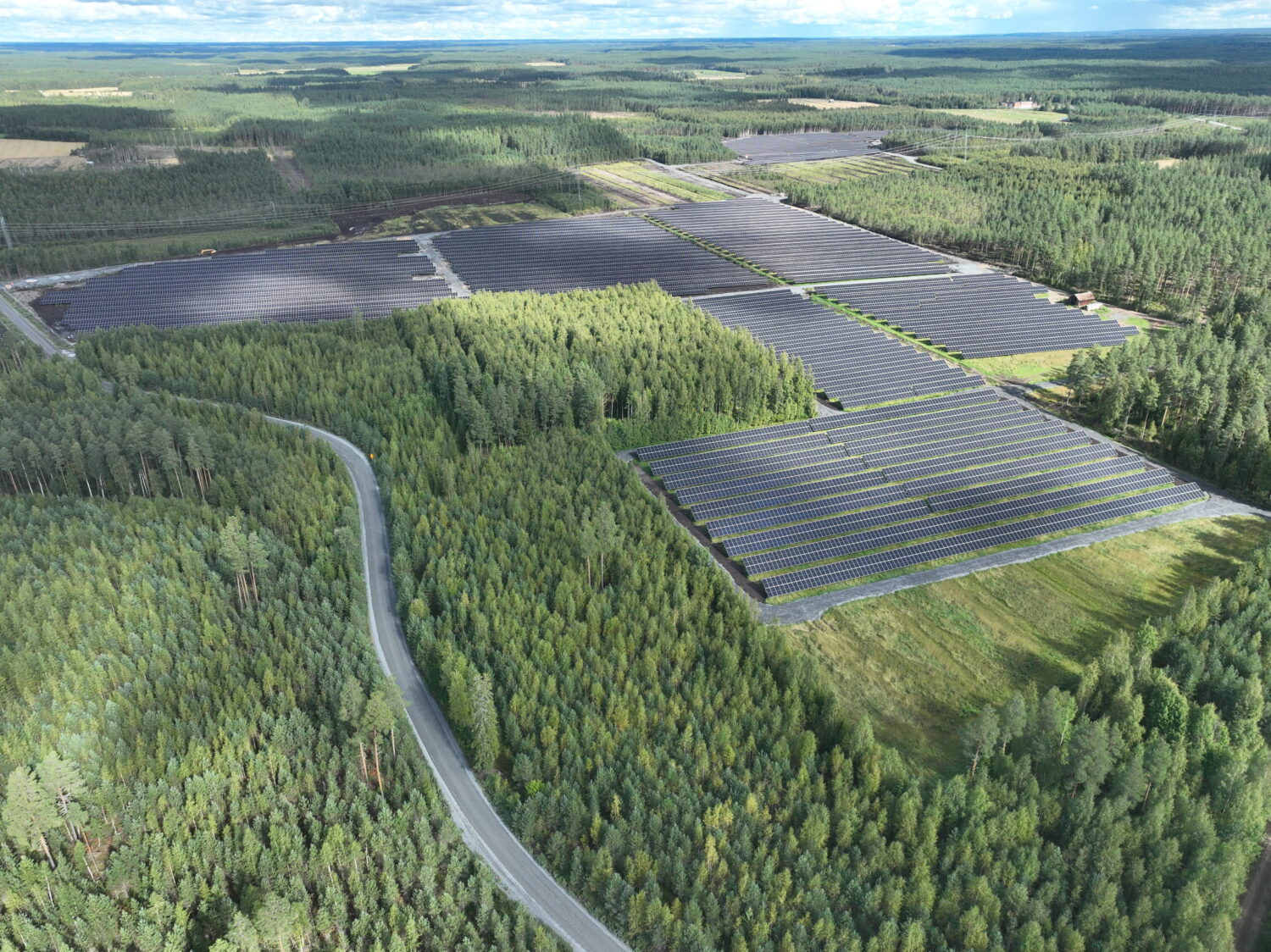
Honkisaarenneva, Kuortane. A 34 MWp solar and BESS hybrid currently under construction. This is the repeatable, mid-scale project that builds a pipeline rather than a one-off.
Three projects, three stages: one producing, one in construction, one in development. That spread is the point. Hybrid is not a pilot for us. It is how we build.
Choosing how to build it
The components of a hybrid park are not the hard part. Panels, batteries, and turbines are available to anyone. The value, and the risk, sit in integration: preparing the site, building the electrical backbone, securing the grid connection, and making the whole system market-ready so the storage is part of the business case from day one rather than bolted on afterwards.
That is the work we do. Solarigo delivers the solar, the Balance of Plant for the BESS, the grid readiness, and the long-term operations and maintenance that keep the asset performing. All solar under one roof.
If your next renewable investment is still framed as a single-asset solar or wind project, it is worth a second look. Hybrid parks combining solar, storage, and, where it fits, wind, offer stronger returns, more flexibility, and a far more predictable business case. The investors who move on this now are the ones who will own the most resilient assets in the market a decade from now.
See our hybrid parks: Hybrid references
Read about BoP for solar and hybrid solutions: Balance of Plant for solar and energy storage

Questions on hybrid energy solutions?
Reach out to us – we’re happy to help!
Erno Syvälahti
Head of Utility Sales