Bees, sheep, and solar panels: what pollinators and grazing bring to a solar park
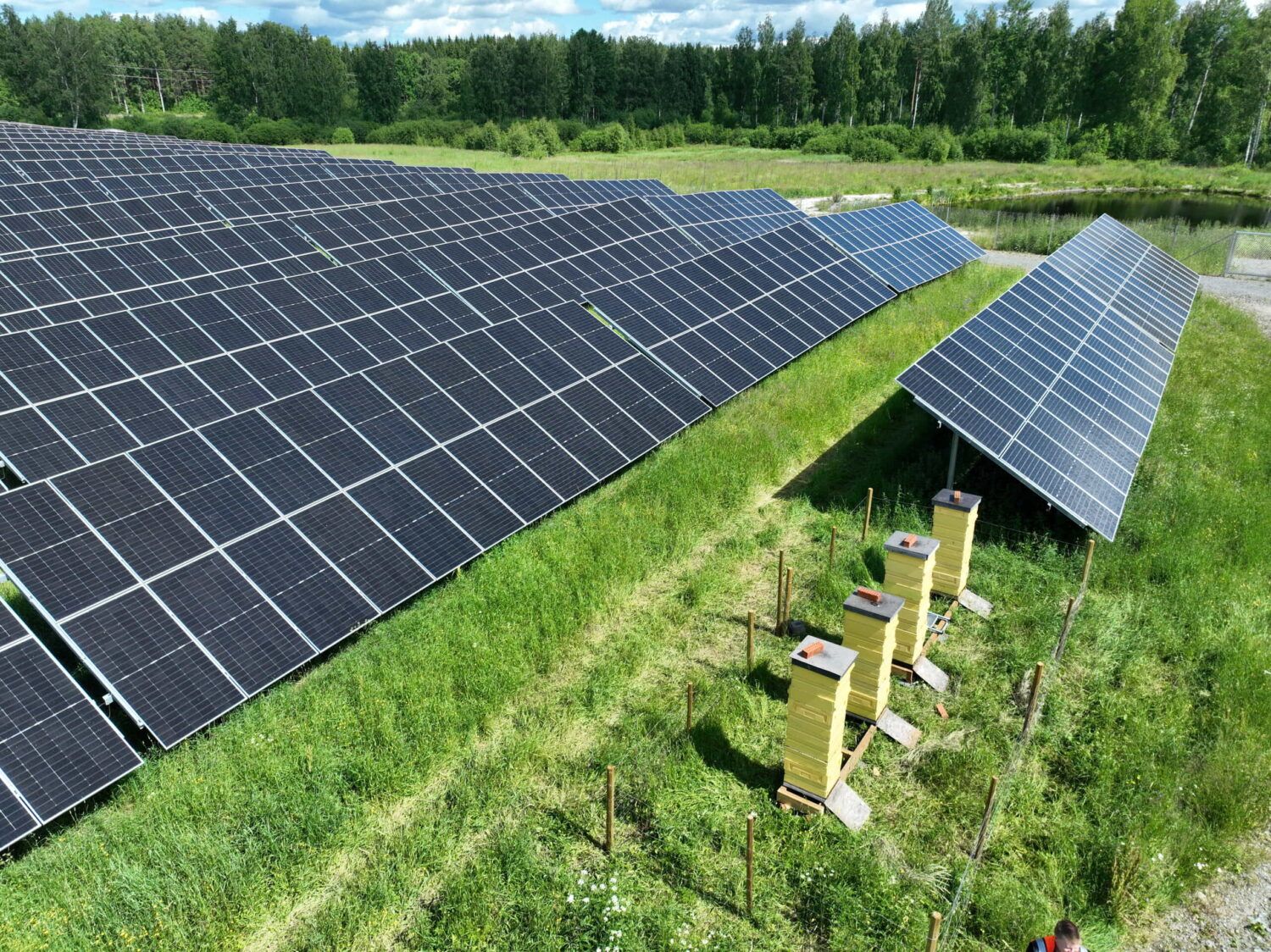
We recently wrote about how the grazing sheep at our Hirvensalmi solar park have been joined by honeybees as part of our work to strengthen local biodiversity.
Now it’s worth taking a closer look at why pollinators and grazing belong in a solar park, and what real benefits emerge when energy generation and biodiversity share the same site.
Pollinators: small insects, big impact
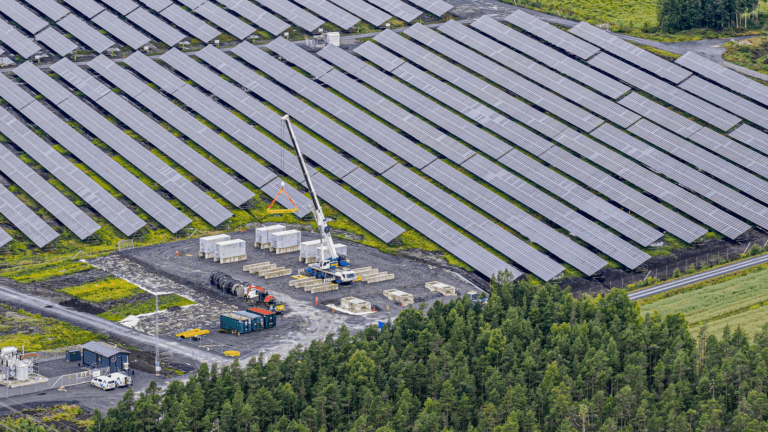
In June, we visited the 5 MWp solar park in Hirvensalmi, where bright yellow beehives now stand beside the panel rows and the meadow blooms among the grass the sheep keep grazed. This isn’t decoration. It’s a way of running a site where every part supports the others.
Pollinators matter far more to food production and nature than their size would suggest. Roughly a third of the world’s crops depend on animal pollination, and many berries, fruits, and oil crops produce poorly without them. At the same time, pollinator populations have declined worldwide, driven by habitat loss, climate change, and chemicals – pesticides in particular.
A solar park turns out to be a surprisingly good place to help. The land between and around the panels, which on many sites is left as plain lawn or gravel, can instead be sown with low-flowering, pollinator-friendly vegetation. At Hirvensalmi, the pasture seed mix sown for the sheep includes white and alsike clover – both valuable nectar sources for bees. The same vegetation feeds the sheep and gives pollinators a steady supply of nectar and pollen.
The benefits to pollinators add up on several fronts:
- Food and shelter. A flowering meadow offers bees and wild pollinators nectar, pollen, and nesting habitat throughout the growing season.
- Benefits that reach beyond the fence. Pollinators that thrive in the solar park also visit surrounding fields and wild plants, improving the pollination of nearby crops and natural vegetation.
- Stronger biodiversity. A habitat built for pollinators benefits insects, birds, and other species more broadly, raising the ecological value of the whole area.
The effects are already visible at Hirvensalmi solar park. Since the site was sown with diverse, flowering vegetation, it has drawn in more insects and a wider range of birds. Instead of a plain energy-generation site, a complete, self-sustaining ecosystem has started to take shape.
Sheep as natural vegetation managers
Vegetation in a solar park has to be kept in check so it doesn’t shade the panels. Usually that means mowing the site mechanically several times a year. Sheep handle the same job naturally – and bring a whole set of additional benefits with them.

By grazing, the sheep keep the grass low without fuel-burning machinery or the emissions that come with it. There’s also no need for chemical herbicides, which is a direct win for pollinators too: fewer chemicals mean a healthier environment for bees and other insects. Grazing also improves the soil, as the animals’ manure fertilises the ground naturally and supports a more varied sward.
Sheep are remarkably well suited to the task. They’re small and calm, and they don’t damage the structures the way goats or cattle might. The panel rows and perimeter fencing create a ready-made, sheltered grazing environment, and the shade beneath the panels keeps the animals cool on hot days. At Hirvensalmi, around 100 sheep manage the vegetation in partnership with local farmer Tiina Jokela.
Agrivoltaics: when energy and nature reinforce each other
When solar generation, grazing, and pollinators are combined on the same site, the result is agrivoltaics – here, in the form of solar grazing. The core idea is the efficient dual use of land: the same hectare produces both clean energy and ecosystem services. The benefits don’t stay separate; they stack and reinforce one another.
- Efficient land use. A solar park doesn’t rule out other activity – energy generation, grazing, and pollination all fit on the same ground.
- Sheep and bees living side by side. The low, diverse meadow the sheep maintain feeds the pollinators, and the same clover-rich vegetation suits sheep and bees alike. The animals don’t get in each other’s way: the hives sit in their own fenced area that the sheep can’t reach, so the bees pollinate in peace while the sheep have a larger pasture of their own. Monitoring and upkeep of the shared site can also be handled together by several partners.
- A possible boost for the panels. Vegetation can cool the microclimate around the site, which may help the panels perform on warm days – while the partial shade from the panels can extend flowering later into the summer.
- Natural maintenance. Grazing replaces mechanical mowing and chemical treatment, cutting both the emissions and the costs of upkeep.
Sites like this are still rare in Finland, even as the conversation about combining solar power with biodiversity grows louder. That’s exactly why pilots like Hirvensalmi matter: they build practical, hands-on experience of how the model performs in Nordic conditions.
“We believe the solar parks of the future won’t exist purely to generate electricity. They can be built into environments that also support biodiversity and the local ecosystem,” says Ilja Timonen, Project Manager at Solarigo.
At Hirvensalmi, we’re deliberately pursuing several benefits at once: the same land produces clean energy, managed pasture, and a thriving environment for pollinators. When the sheep arrived alongside the bees, a complete ecosystem began to form, with each part supporting the rest.
Read more about the agrivoltaics pilot in Hirvensalmi: Combining solar power and agriculture benefits both.
How agrivoltaics affects financing
Pollinators and sheep aren’t just an environmental gesture. They also have a bearing on how a solar park gets financed. Sustainability and biodiversity have become central considerations in funding energy projects, and approaches like agrivoltaics can strengthen a project’s financeability in several ways.
Sustainability carries weight with financiers. Lenders and investors increasingly assess projects through environmental, social, and governance (ESG) criteria. A project that delivers measurable benefits to nature alongside clean energy fits well within green and sustainable finance frameworks, such as the EU’s sustainable finance principles. That can improve both access to financing and the terms on offer.
Better acceptance lowers risk. Dual land use and visible benefits to nature improve a project’s local and social acceptance. When a solar park is seen as something that enriches the landscape and local nature – rather than just an industrial site – permitting and cooperation with landowners and the surrounding community tend to run more smoothly. Addressing nature early also reduces risks that could otherwise slow a project down or even stop it. Lower risk makes a project more attractive to finance.
Operating costs come down. Grazing replaces mechanical mowing and chemical treatment, lowering the plant’s upkeep costs across its entire lifetime. A predictable, moderate cost structure supports the project’s profitability and, with it, its financeability.
A sustainable project is a long-term investment. A solar park is an investment measured in decades. Solutions that support the surrounding nature and the local community make a project more stable and more appealing to long-term investors – while adding to its overall value beyond electricity generation alone.
Learning together with local partners
Bringing bees into a solar park is also a learning process for Solarigo. The hives are monitored regularly and checked weekly to safeguard both the health of the bees and the smooth operation of the plant. Like the sheep grazing, the pollinator project is carried out in partnership with local people: the farmer and a local beekeeper. That local expertise is essential to developing new approaches over the long term, grounded in real experience.
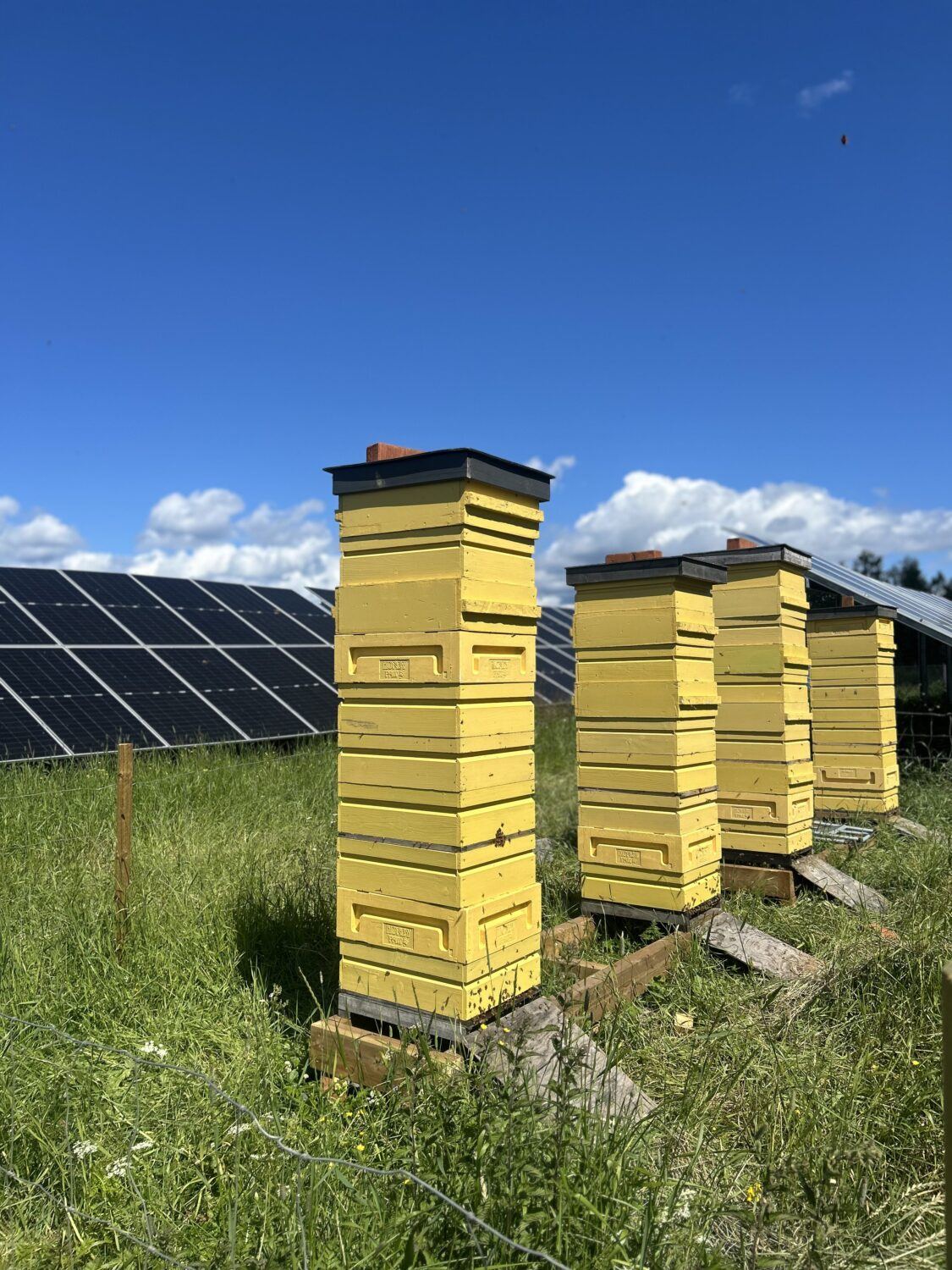
In Hirvensalmi, we want to show that energy generation and a healthy natural environment aren’t opposites, but parts of the same whole. Pollinators, sheep, and solar panels each say something about what the solar parks of the future can be: places that produce clean energy and living nature side by side.
More information
Ilja Timonen
Project Manager, Solarigo Systems Oy
ilja.timonen@solarigo.fi
+358 50 308 4336