Green energy is now being produced on a boggy industrial wasteland – Finland holds vast potential

Even challenging terrain can be perfectly suited for solar power. A large solar power plant has just been completed in Kitee, on the shores of Lake Saimaa, transforming a former industrial wasteland into a source of renewable energy. It’s the first industrial-scale solar power plant in North Karelia — and a prime example of Finland’s untapped potential for solar development.
Unused industrial land should be put to work
Underutilised areas within industrial zones could and should play a much larger role in solar power production.
“Tailings ponds, former landfills and decommissioned peat production sites, for instance, could all be repurposed. Some of these areas could easily accommodate solar power plants of tens of megawatts,” says Mika Varis, Project Manager at Solarigo Systems Oy.
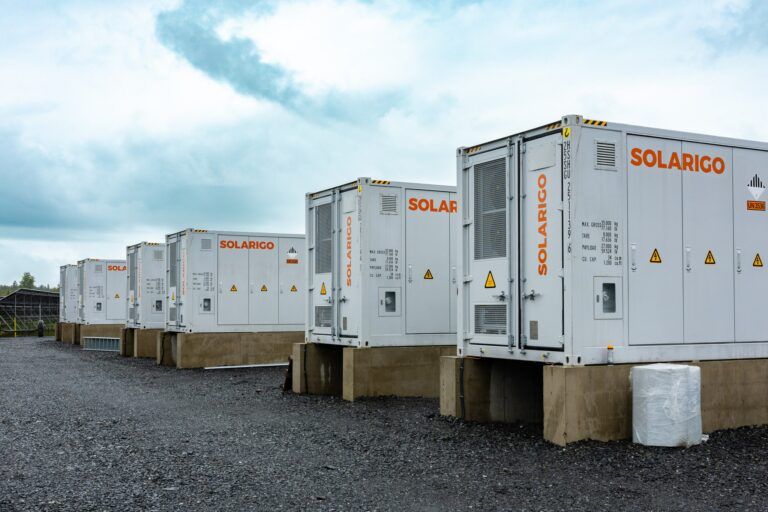
A recent example comes from Kitee, where Solarigo has built a 6 MWp solar plant. Located in the Puhos industrial park, the facility now produces renewable energy on land that was previously considered unusable.
The project was commissioned in stages, and the plant will be operating at full capacity by the end of June.
Sun powers the entire industrial area
Solarigo is responsible for the construction, operation, and maintenance of the Puhos solar plant. According to Varis, interest in solar energy has grown rapidly among Finnish companies.
“We’re in ongoing discussions with the mining sector and other heavy industries. When electricity consumption is high, locally produced power brings the biggest benefits — both in sustainability and cost savings. Typically, solar can cover 15–30 percent of a company’s annual electricity needs”
At Puhos, a closed electricity distribution network allows the solar energy to flow directly to nearby factories — Bakelite and Surfactor — as well as the property company Puhoksen Lastu. During summer, solar power covers the entire area’s electricity demand, with the excess sold to the grid.
Turning unused land into productive assets
The roughly 7.5-hectare Puhos site is divided into two parts: one built on the former wood-processing yard of a chipboard factory, and the other on boggy wasteland that had long remained unused.
“These kinds of sites are often too difficult to develop for other purposes, so leasing them for solar projects is a smart solution. Landowners earn income from previously unproductive areas, we can build cost-effective solar capacity, and local businesses get access to affordable green electricity. From the municipality’s perspective, it also supports regional development and helps attract new companies. Everyone wins,” says Varis.
The solar plant project also tied in neatly with another local development: a large bio- and wood-terminal construction site just a kilometre away. Nearly 10,000 cubic metres of surplus soil from that project were reused to build the base for the solar plant — a circular economy solution in practice.
“On top of all that, the project has had a major employment impact locally. We’ve worked with many contractors and service providers from the region, and we’ll continue to rely on local partners for operations and maintenance. Supporting local employment is something we take seriously,” Varis adds.